
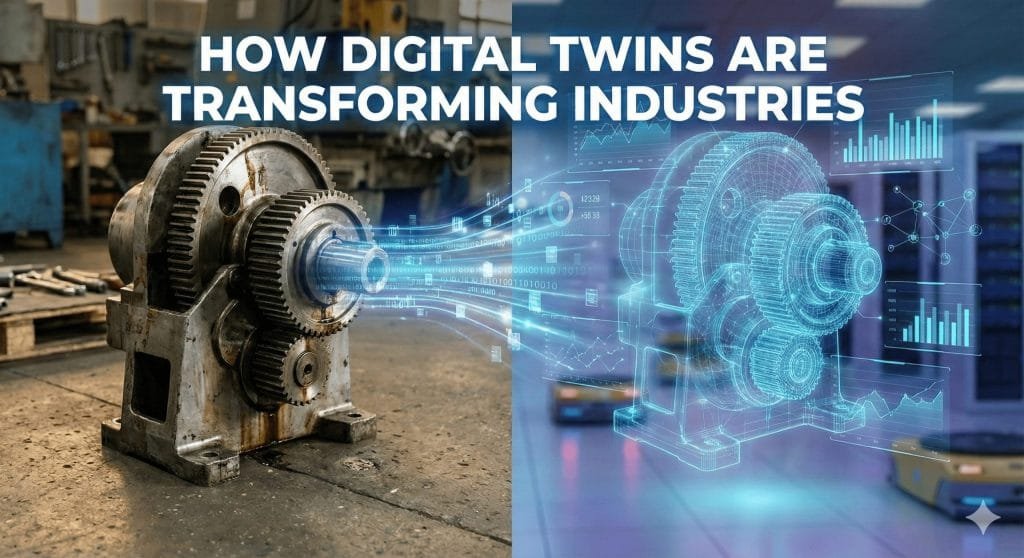
With the advance of technology comes the introduction of the term “Digital Twins”, which, as we will soon discover, has the potential to reshape industries. Digital Twins refers to the virtual representation of a physical object such as an asset, system, or process, enabling simulation, optimization and analysis. Digital Twins permeate into most sectors like healthcare, manufacturing, urban planning, and energy, aiding in efficient operations, cost reduction, and innovation.
Understanding The Concept Of Digital Twins
Digital Twins are synchronized with the real world by capturing real time information from IoT devices, sensors and other technologies. Physical objects such as machinery, buildings and even entire ecosystems are monitored by the sensors which relay the information to a cloud system for analysis. Efficient virtual models enable businesses to monitor how physical objects behave and their health indicators in real time. This model is dynamic and ever-growing, providing capabilities to forecast failures, recommend modifications, and enhance operational decision-making.
Impact on Manufacturing and Industry 4.0
The phenomenon of “Industry 4.0” wasn’t achievable until the usage of ‘digital twins’ technology, which allows industries to monitor and analyze their production processes remotely. As an example, a factory may use a digital twin to simulate its production line, which allows them to analyze bottlenecks, inefficiencies, and maintenance cycles without halting operations. Resultingly, Operations and Maintenance (O&M) downtimes, costs, and improved work-in-progress (WIP) quality ‘purge’ control all improve concurrently.
Additionally, manufacturers can and should use them to test new designs and processes prior to incurring the unneeded costs and risk associated with building physical prototypes. If changes are needed, the real-time feedback from the model allows for swift adjustments, greatly expediting the innovation cycle. In turn, this supports increasing overall demand from prospective and existing customers.
Revamping Healthcare
Digital twin technology has the potential to unlock new ways in which the healthcare industry can advance their levels of patient care and research interventions with the help of advanced medical technologies. Physicians can utilize digital twins of human bodies or organs to better visualize & comprehend extremely difficult medical complexities, thus tailoring them to treat the patient. Take the heart as an example, with a digital twin, doctors would be able to replicate various scenarios and see how different medical interventions impact the functions of the heart, thus assisting them in better predicting benefits and associated threats beforehand and opting for the most optimal medical intervention.
Moreover, healthcare facilities are increasingly embracing digital twins to enhance the monitoring and optimization of their systems, guaranteeing that everything is working smoothly and anticipating any breakdowns before they occur. This technology improves the safety of patients and also assists in the efficient management of hospitals.
Smart Cities and Urban Planning
Urban planning and the management of a city’s infrastructure are other domains where digital twins are having a remarkable influence. With a complete digital twin of a city, urban planners can model traffic, public transportation, and even weather phenomena. This ensures better planning of cities by forecasting the impacts of various modifications on multiple regions of the city. For instance, a city could model what the outcomes of constructing a new bridge or changing the traffic pattern would be and determine if the changes would benefit residents or businesses.
Energy Sector Advancements
The energy industry is one of the fields where digital twins are further advancing the sustainability and efficiency of energy systems. They enable companies to monitor energy grids, forecast energy needs, and streamline operations at power plants. Providers of energy are better positioned to figure out the most reliable ways to incorporate renewable sources, such as wind or solar power, into the grid by simulating the operation of power plants and systems that depend on renewable sources.
Future Prospects and Challenges
The array of possible uses for digital twins is enormous and ever expanding. Addressing challenges such as merging different data sets, security issues, and finding qualified experts to interpret and use the data meaningfully will be critical. In any case, it is certain that digital twins will grow stronger and more widely used as technology develops, marking a new epoch in every industry.
Conclusion
The era of relying on digital twins as futuristic counterparts is long gone. Industries are being transformed with unprecedented insight into their operations, enabling optimization for manufacturing, healthcare, energy, and beyond. The continuous advancement of technology means digital twins will increasingly embed into the essence of various sectors globally, unlocking new avenues for operational efficiency, innovation, and growth hub media.


