In today’s digital-first world, businesses are rapidly shifting their focus from traditional methods to online marketing. But what is online marketing, and how does it impact the success of a business in the digital age?
In simple terms, online marketing—also known as internet marketing or digital marketing—refers to all marketing efforts that use the internet to promote products, services, or brands. It is a powerful way for businesses to connect with potential customers through search engines, social media, emails, content marketing, and other digital channels.
What is the Meaning of Online Marketing?
Online marketing means reaching your target audience through the internet. Whether it’s running Google Ads, posting on Instagram, or sending out email newsletters, every online interaction counts as part of your digital marketing strategy. The goal is to build visibility, generate leads, and convert them into paying customers.
Internet Marketing Defined
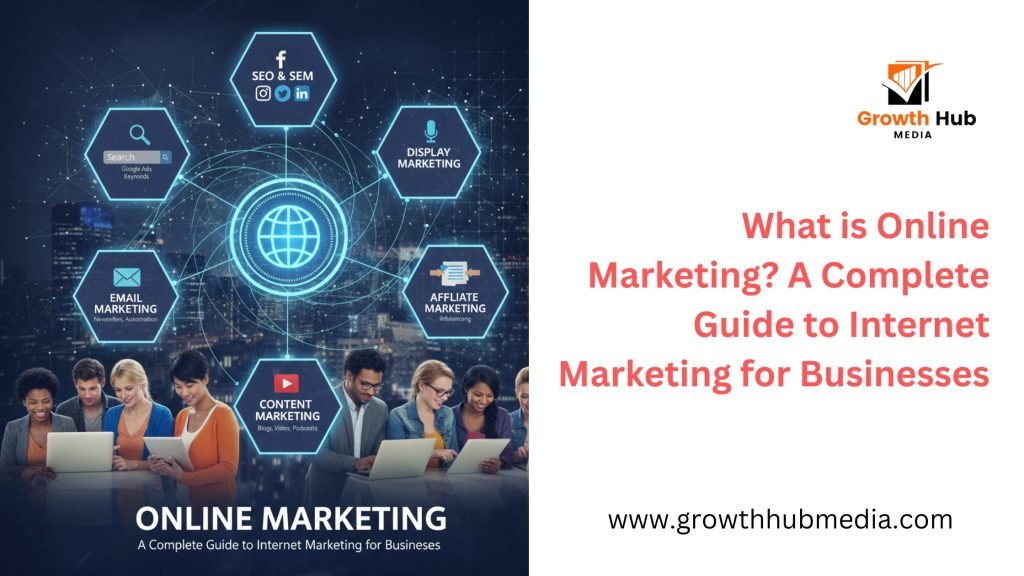
Internet marketing is a broad term that includes:
- Search Engine Optimization (SEO): Optimizing your website so that it ranks higher on search engines like Google.
- Pay-Per-Click (PPC): Paid ads that appear at the top of search results.
- Social Media Marketing (SMM): Promoting content through platforms like Facebook, Instagram, and LinkedIn.
- Email Marketing: Sending promotional emails to engage and convert leads.
- Content Marketing: Creating valuable, relevant content that attracts and retains a clearly defined audience.
Digital Marketing and Content Marketing: What’s the Difference?
While digital marketing is the umbrella term, content marketing is a crucial part of it. Content marketing involves producing blog posts, videos, infographics, podcasts, and more to provide value and engage customers.
Think of it this way:
- Digital Marketing = Strategy + Tools + Channels
- Content Marketing = Content creation within the digital strategy
So, if you’re using blogs, social media posts, or videos to promote your business, you’re engaging in both digital marketing and content marketing.
Digital Marketing Images: Why Visuals Matter
Today’s consumers are highly visual. Including digital marketing images—such as banners, infographics, and video thumbnails—boosts engagement, improves conversion rates, and helps your brand stand out. Visual content increases retention and is more likely to be shared across platforms.
Platforms like Canva, Adobe Express, or even AI-based design tools make it easy to create high-quality, branded visuals for your campaigns.
Starting an Online Marketing Business
An online marketing business offers services like SEO, content writing, graphic design, ad campaign management, and social media management to other businesses. If you’re tech-savvy, creative, and understand the fundamentals of digital marketing, starting your own online marketing agency can be highly rewarding.
Here’s how to start:
- Pick your niche (e.g., real estate, dental clinics, eCommerce).
- Build a portfolio.
- Create a website optimized for SEO.
- Offer services like content creation, SEO, and PPC.
- Network and find clients through LinkedIn, Upwork, or cold emails.
Online Business Marketing Strategies That Work
Here are some tried-and-tested online business marketing strategies:
- SEO-optimized blog content to drive organic traffic.
- Email campaigns to nurture leads and retain customers.
- Social proof in the form of testimonials and reviews.
- Influencer marketing to reach a wider audience.
- Google My Business listing for local SEO.
Final Thoughts: Marketing Online Is a Must for Growth
Understanding what is marketing online is key for modern businesses. Whether you’re a startup, freelancer, or established brand, embracing internet marketing allows you to reach customers globally, 24/7, at a lower cost than traditional advertising.
From creating compelling digital marketing content to optimizing for search engines, the possibilities with online marketing are endless. Start small, stay consistent, and monitor your growth.


